 ArtFarm


Tin tức
Rau muống biển như một ngôn ngữ thị giác
Th5
English below
Văn Tâm
Từ một loài hoa bò sát mặt cát, chùm tranh mở ra một mỹ cảm ven biển vừa dịu nhẹ vừa bền bỉ. Rau muống biển không còn chỉ là chi tiết thực vật của phong cảnh, mà trở thành nơi hội tụ của ánh sáng, gió, nhịp sóng và ký ức về đường bờ Việt Nam.
Từ hoa ven cát đến hình tượng thị giác
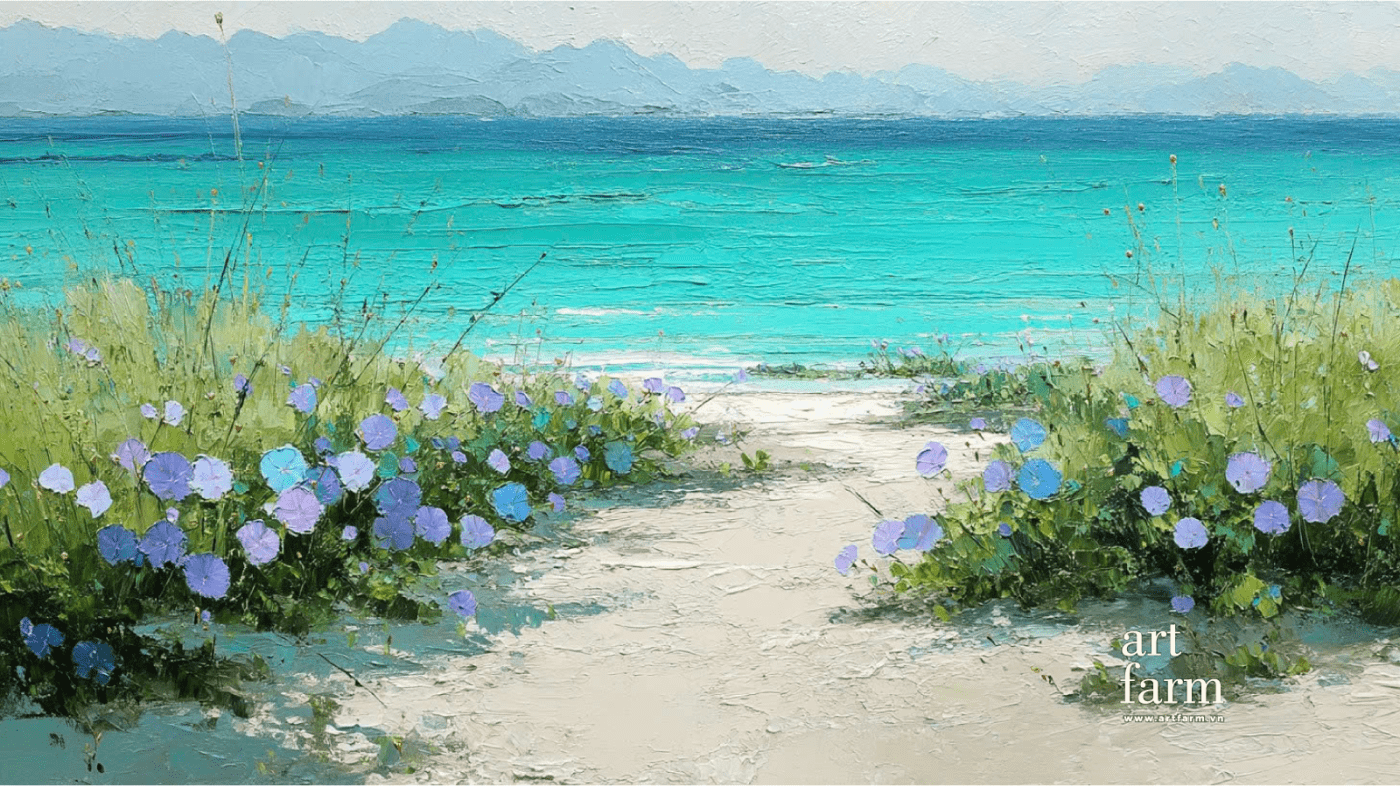
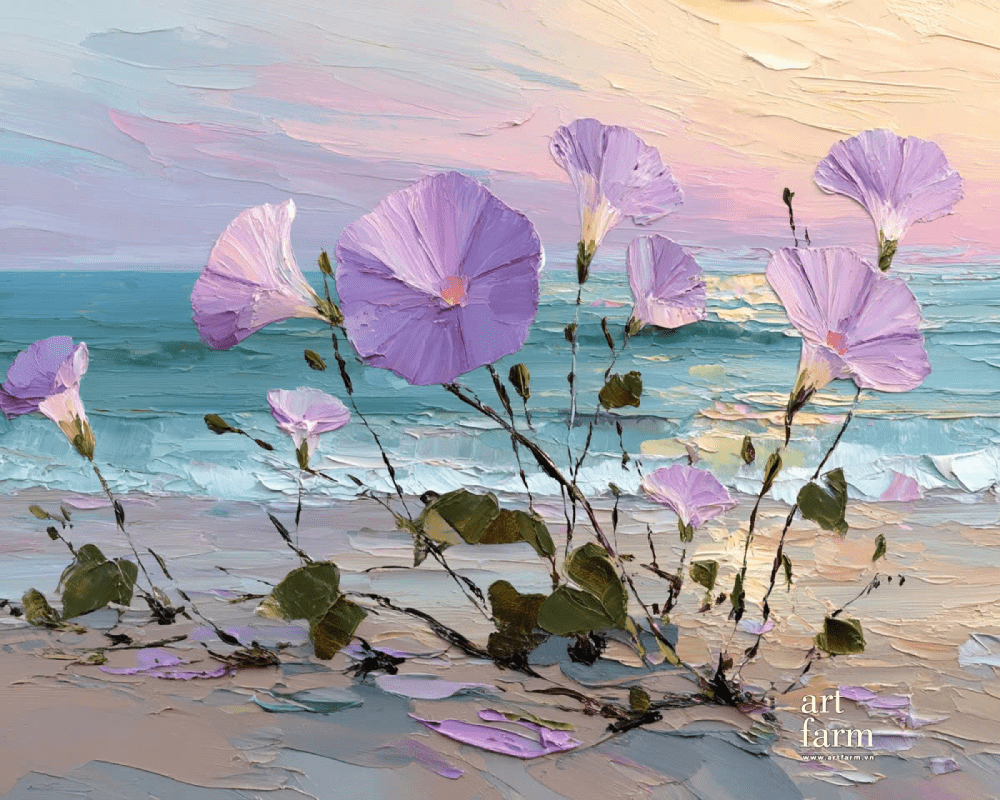
Điểm đáng giá nhất của loạt tranh là cách đối tượng nhỏ bé này được giải phóng khỏi vai trò minh họa. Những cánh tím mỏng, dây leo mềm và lá tròn xanh đậm không hiện lên như mẫu thực vật học, mà như một hệ nhịp điệu tạo hình lan trên nền cát và nước. Nhờ thế, rau muống biển mang một phẩm chất biểu tượng: mềm mại nhưng không yếu đuối, bình dị mà vẫn có sức chiếm lĩnh thị giác.
Bề mặt sơn và bảng màu của sự tĩnh
Loạt tranh thuyết phục ở chiến lược tiết chế sắc độ. Cát sáng, lam ngọc, trắng ngà, tím lavender và hồng phấn được phối trong một trường màu thở, không phô diễn mà ngân dài. Trên nền ấy, impasto phát huy đầy đủ chức năng: lớp sơn dày, vệt cọ nổi, mép dao bảng và độ gồ của chất liệu khiến người xem gần như chạm được vào hơi ẩm, gió mặn và sự dịch chuyển rất nhẹ của đường bờ.
Biển như một trạng thái sống
Cách tiếp cận sáng tạo của chùm tranh nằm ở chỗ biển không bị đẩy ra hậu cảnh để làm nền cho hoa. Biển hiện diện như một cảm thức: ánh phản quang, đường chân trời mờ, vệt sóng và không khí nghỉ ngơi thấm vào toàn bộ mặt tranh. Vì vậy, tác phẩm không chỉ đẹp ở nghĩa trang trí, mà còn gợi một trạng thái cư trú an hòa, nơi thiên nhiên bản địa được cảm bằng ký ức và nội tâm.
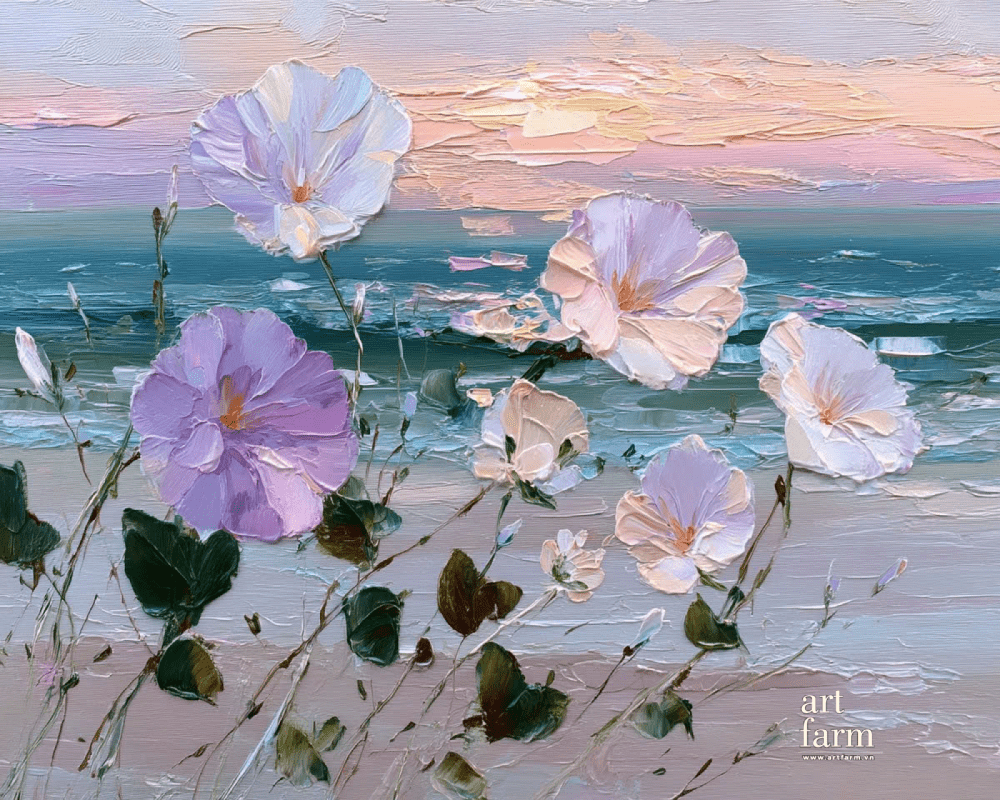
Từ một loài hoa ven biển rất đỗi bình dị, loạt tranh dựng nên một ngôn ngữ hội họa giàu chất liệu, tiết chế và thơ, đủ sức đi từ không gian sống đến không gian gallery.
Nhìn tổng thể, chùm tranh về rau muống biển cho thấy một tư duy mỹ thuật chín chắn: không tìm cái lớn ở sự phô trương, mà tìm chiều sâu trong chính những gì gần gũi nhất của tự nhiên Việt Nam. Đó là một cách làm vừa đương đại vừa giàu căn tính.
SEA MORNING GLORY AS A VISUAL LANGUAGE
From a flower that creeps quietly across beach sand, this series unfolds a coastal sensibility that is at once gentle and resilient. Sea morning glory no longer appears as a minor botanical detail within the landscape, but as a site where light, wind, wave rhythm, and the memory of Vietnam’s shoreline converge.
From shore flower to visual image
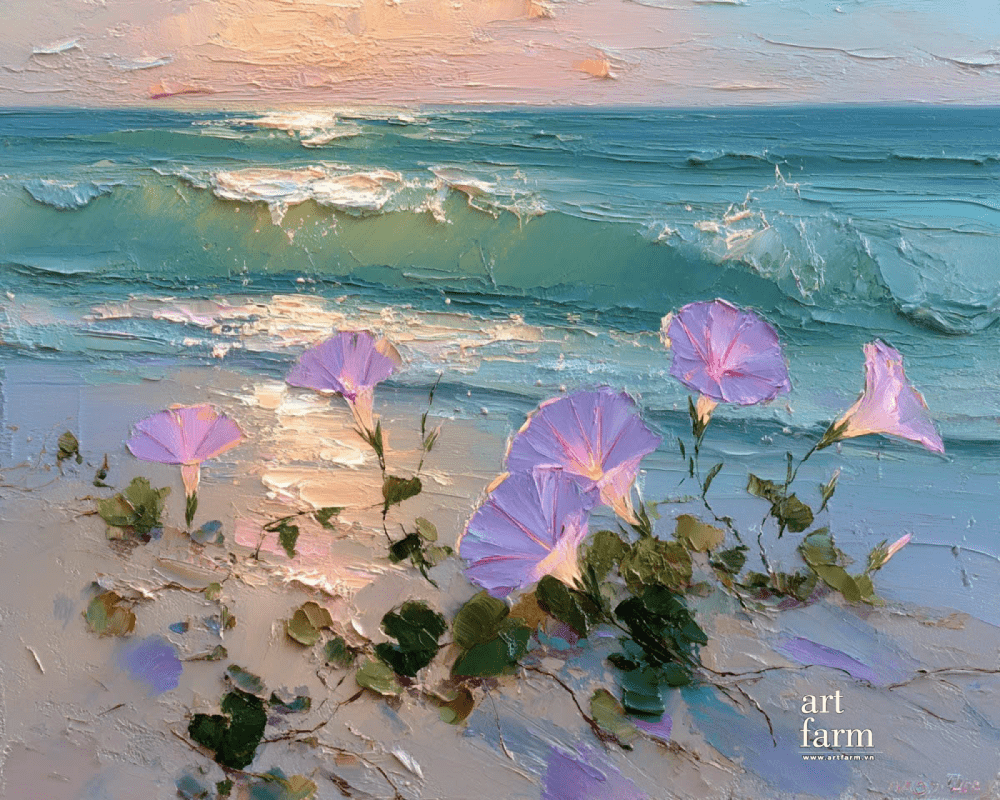
The most compelling achievement of the series lies in the way this modest subject is released from mere illustration. The thin lavender petals, supple trailing vines, and dark green rounded leaves appear less as botanical specimens than as a system of visual rhythm spreading across sand and water. In this transformation, sea morning glory acquires symbolic force: soft without fragility, humble yet visually commanding.
A palette of restraint, a surface of stillness
The series is equally persuasive in its disciplined chromatic strategy. Pale sand, aquamarine, ivory white, lavender, and blush pink are arranged in a breathing tonal field that never seeks spectacle, only resonance. Within this quiet structure, impasto becomes decisive: thick paint, raised ridges, palette-knife edges, and tactile surfaces allow the viewer to sense humidity, salt air, and the subtle movement of the shore itself.
The sea as a condition of being
What gives the series its originality is that the sea is never reduced to a picturesque backdrop. It enters the work as sensibility: reflected light, softened horizons, traces of waves, and an atmosphere of repose permeate the surface. The result is more than decorative beauty. These paintings evoke a mode of dwelling in which native nature is felt through memory, intimacy, and calm.
From a humble coastal flower, the series builds a painterly language rich in material texture, tonal restraint, and poetic resonance – equally at home in refined living spaces and in the gallery.
Taken together, these works reveal a mature artistic intelligence: they do not seek grandeur through excess, but discover depth within the familiar forms of Vietnamese nature. That is what allows the series to feel at once contemporary, rooted, and memorable.
Hashtags: #RauMuongBien #CanvasArt #CoastalArt #ArtfarmVN #WallArt