
 ArtFarm



Tin tức
HOA SÚNG VÀ BÓNG NƯỚC CỦA TÂM HỒN
Th5
English below
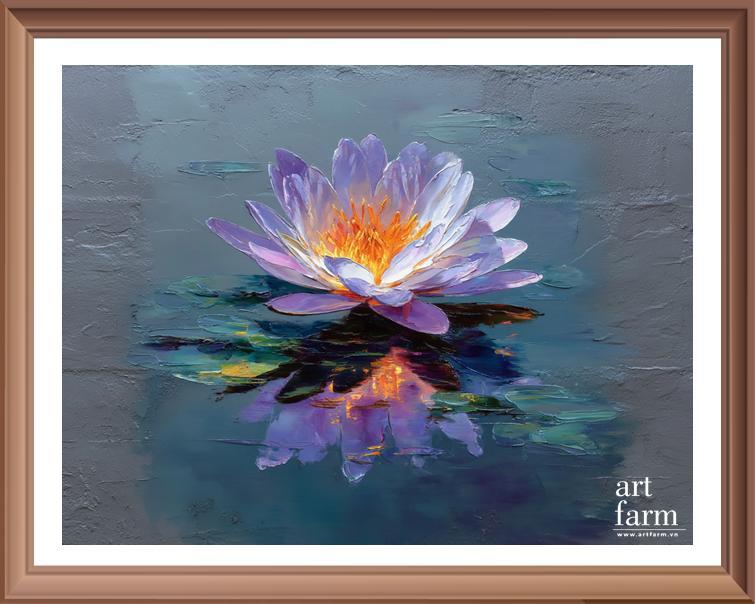
Không ồn ào như những loài hoa phô sắc giữa nắng lớn, hoa súng đi vào hội họa bằng một nhịp điệu chậm, một vẻ đẹp nửa hiện nửa ẩn trên mặt nước. Trong chùm tranh này, hoa súng không chỉ là một đề tài thực vật nhiệt đới, mà còn là một biểu tượng văn hóa – văn học, nơi ký ức ao hồ quê Việt, mỹ cảm Á Đông và bút pháp sơn dầu đương đại gặp nhau trong cùng một trường cảm xúc.
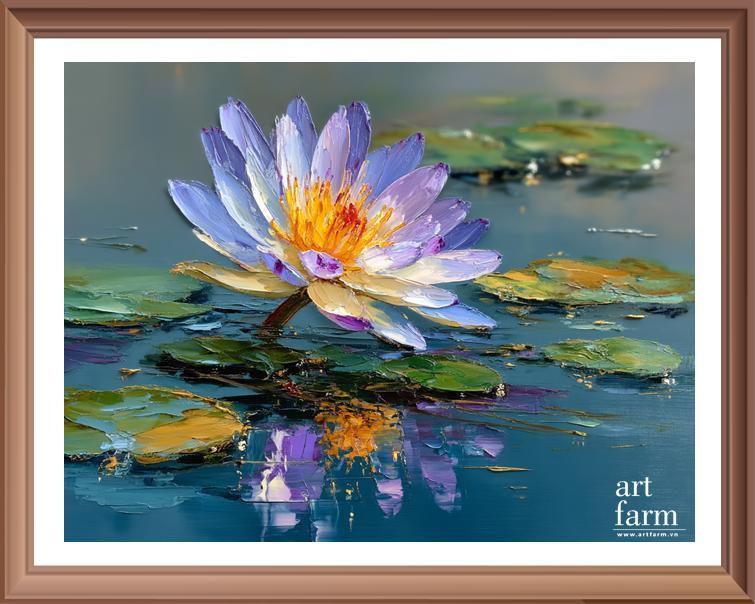
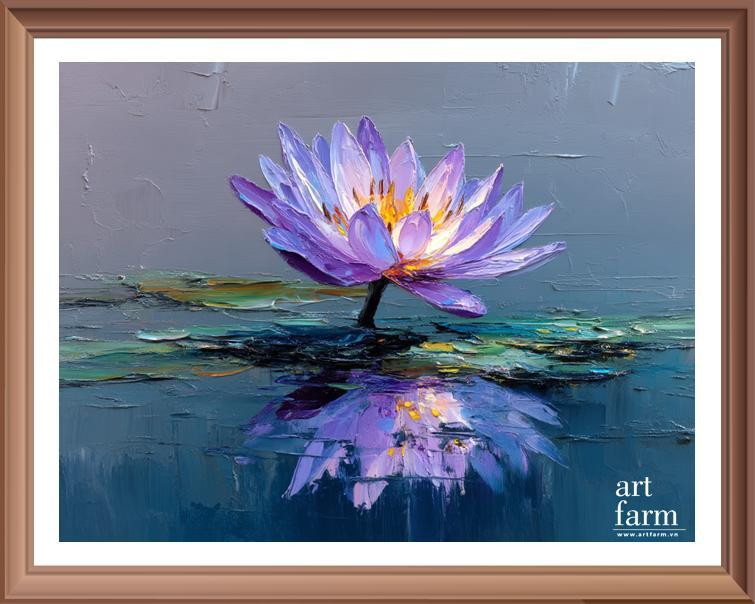
Điều gây ấn tượng trước tiên là cách họa sĩ dựng hoa súng như một trung tâm ánh sáng. Cánh hoa tím nhạt, trắng ngà và vàng cam không nở ồ ạt mà mở ra từng lớp, như thể mỗi cánh là một nhịp thở. Sự hiện diện của hoa trên mặt nước khiến toàn bộ bố cục mang dáng dấp của một bài thơ thị giác: ít chi tiết, nhiều khoảng lặng, nhưng mỗi khoảng lặng đều có sức ngân. Ở đây, mặt nước không chỉ làm nền; nó là chiếc gương của cảm xúc, phản chiếu hoa đồng thời phản chiếu trạng thái nội tâm của người ngắm.
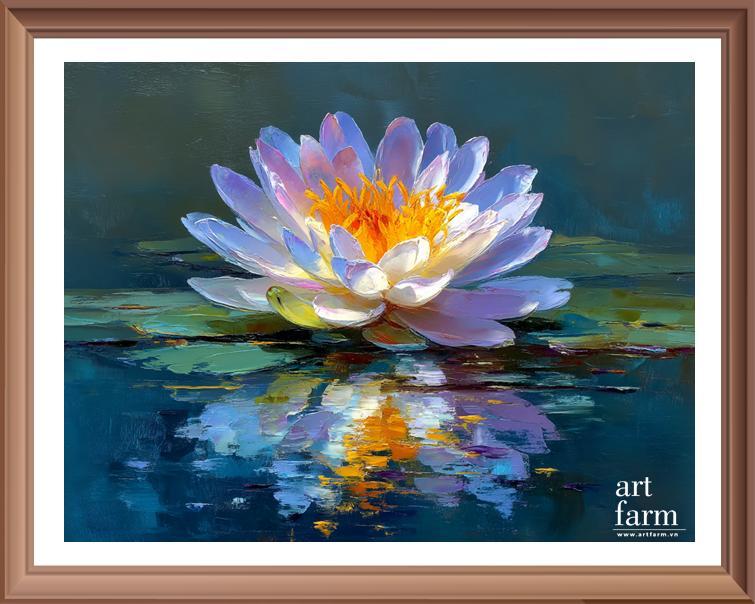
Nếu trong văn học, hình ảnh hoa thường lưu lại bằng hương và ý niệm, thì trong hội họa loạt tranh này, hoa súng lưu lại bằng chất liệu. Bề mặt impasto dày, các nhát bay màu và dao bảng làm cho cánh hoa có độ chạm, có khối và có cả độ mong manh vật chất. Điều đáng quý là kỹ thuật không trở thành màn phô diễn. Chất sơn được giữ ở mức tinh tế, đủ để người xem cảm được sự rung lên của mặt nước, sự mềm của cánh và ánh sáng mỏng cuối ngày. Chính sự tiết chế này tạo nên phẩm chất sang của tranh: một vẻ đẹp không đi tìm sự choáng ngợp, mà hướng đến chiều sâu của cảm nhận.
Ở bình diện văn hóa, hoa súng gợi một miền rất gần với tâm thức Việt Nam. Nó thuộc về ao vườn, mặt nước quê nhà, những buổi sớm tinh mơ và những chiều yên ít gió. Không phải ngẫu nhiên mà nhìn hoa súng, người xem dễ nghĩ đến thơ, đến nhạc, đến một nhịp sống chậm đã dần lùi xa trong đời sống hiện đại. Bởi vậy, loạt tranh này có giá trị không chỉ ở tính thẩm mỹ trang trí. Nó gợi lại một cách sống: biết dừng, biết ngắm, biết để cho cái đẹp thấm chậm vào lòng người.
HOA SÚNG TRONG LOẠT TRANH NÀY KHÔNG CHỈ NỞ TRÊN MẶT NƯỚC; NÓ NỞ TRONG MIỀN KÝ ỨC VĂN HÓA, NƠI HỘI HỌA CHẠM VÀO VĂN HỌC VÀ SỰ TĨNH LẶNG TRỞ THÀNH MỘT GIÁ TRỊ THẨM MỸ.
Từ góc nhìn tiếp nhận hội họa đương đại, chùm tranh hoa súng này thành công vì nó đưa người xem đi từ thị giác đến suy tưởng. Nó không buộc ta phải ngạc nhiên, mà khiến ta muốn ở lại lâu hơn trước mặt tranh. Và chính trong độ chậm ấy, người xem nhận ra rằng một bông hoa trên mặt nước đôi khi có thể làm được điều mà nhiều hình ảnh lớn lao không làm nổi: mở ra một thế giới nội tâm dịu sáng, sâu và bền.
WATER LILIES AND THE SOUL OF REFLECTIVE WATER
Unlike flowers that command attention through brilliance alone, the water lily enters painting through slowness, suspension, and a beauty that is half-revealed upon the water. In this series, it is not merely a tropical botanical subject, but a cultural and literary image in which the memory of Vietnamese ponds, an East Asian sensibility of contemplation, and contemporary oil painting converge within a single field of feeling.
What first compels the eye is the way the artist constructs the water lily as a center of light. Petals of pale violet, ivory, and warm gold do not burst open dramatically; they unfold in layers, as though each petal were a measured breath. Because the flower stands upon reflective water, the composition takes on the character of a visual poem: sparse in detail, generous in silence, and resonant within each pause. Water here is not a backdrop. It is a mirror of feeling, reflecting the blossom while also reflecting the inner state of the viewer.
If literature allows flowers to linger through fragrance and metaphor, these paintings allow them to endure through materiality. Thick impasto, palette-knife passages, and raised paint ridges give the petals tactility, volume, and a delicate physical vulnerability. Yet technique never turns into spectacle. Material presence is handled with refinement, just enough for the viewer to sense the vibration of the water, the softness of the bloom, and the thinning light of dusk. It is this restraint that gives the series its elegance: a beauty that does not seek to overwhelm, but to deepen perception.
At the cultural level, the water lily evokes a realm deeply familiar to Vietnamese consciousness. It belongs to garden ponds, still domestic waters, early mornings, and quiet afternoons. It is no coincidence that these paintings call to mind poetry, music, and a slower rhythm of life that modernity has steadily displaced. For this reason, the series is more than decorative. It restores a mode of living with beauty: to pause, to observe, and to allow form and light to enter the heart gradually.
THESE WATER LILIES DO NOT MERELY BLOOM UPON WATER; THEY BLOOM WITHIN CULTURAL MEMORY, WHERE PAINTING TOUCHES LITERATURE AND STILLNESS BECOMES AN AESTHETIC VALUE IN ITSELF.
From the perspective of contemporary art reception, this series succeeds because it leads the viewer from sight into reflection. It does not force wonder; it invites duration. And in that slowness, one discovers that a single flower upon water can sometimes achieve what grander images cannot: it opens an inward world – gentle, luminous, and enduring.